Charlotte Bühler (1893–1974), Psychology
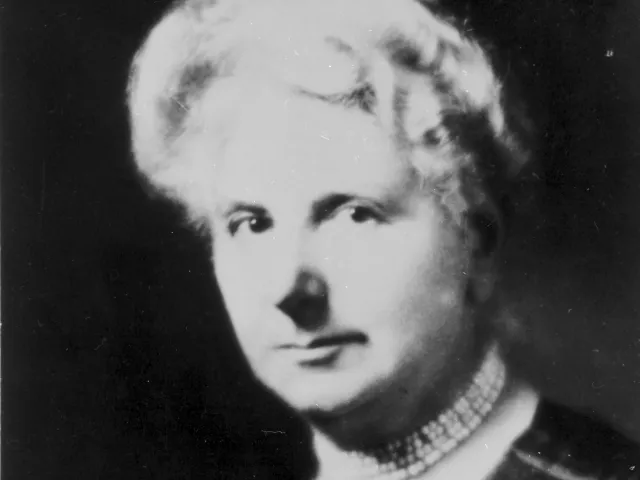
Charlotte Bühler (1893–1974), Psychology
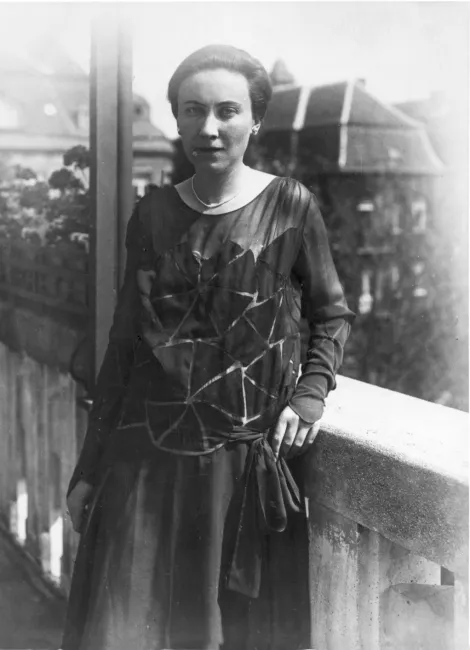
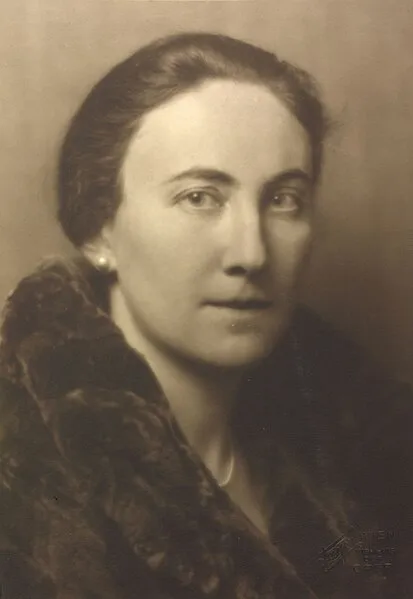
Foto Ernst & Cesanek, Wien
Exlibris of Karl and Charlotte Bühler
Exlibris of Karl and Charlotte Bühler
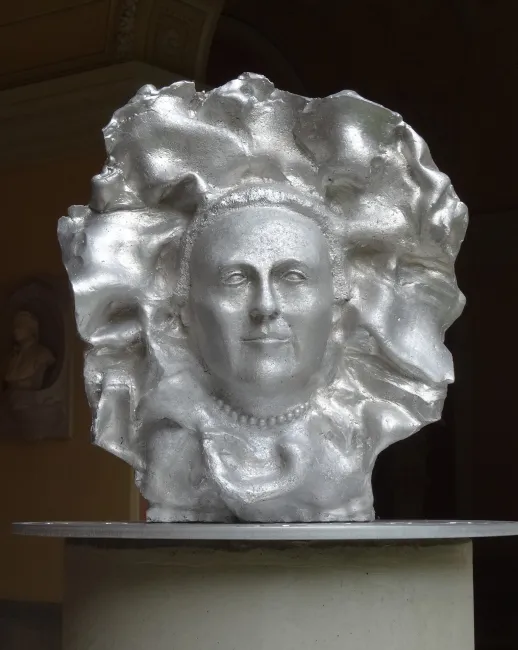
Monument to Charlotte Bühler in the Arkadenhof (arcaded courtyard) of the University of Vienna, sculptured by Thomas Baumann, unveiled 2016
Monument to Charlotte Bühler in the Arkadenhof (arcaded courtyard) of the University of Vienna, sculptured by Thomas Baumann, unveiled 2016
Katharina Kniefacz
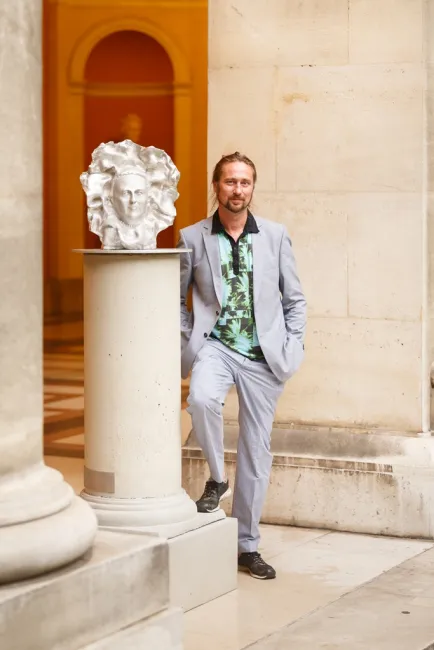
Memorial to Charlotte Bühler in the Arkadenhof (arcaded court yard) of the University of Vienna, with the artist Thomas Baumann (2016)
Memorial to Charlotte Bühler in the Arkadenhof (arcaded court yard) of the University of Vienna, with the artist Thomas Baumann (2016)
derknopfdruecker.com
Charlotte Bühler (1893–1974), Psychologie
Charlotte Bühler (1893–1974), Psychologie
Developmental psychologist, founder of the „Vienna School of Infant and Adolescent Psychology“
„Beginnend mit dem Studium der Kinderpsychologie hat sich Charlotte Bühler nachfolgend der Jugendpsychologie auf der Grundlage von Tagebüchern gewidmet, um letztlich den gesamten Lebenslauf des Menschen zum Gegenstand der Entwicklungspsychologie werden zu lassen.“
Prof. Lieselotte Ahnert, Developmental psychologist at the University of Vienna
Charlotte Bühler developed a keen interest in psychological problems in her youth. She began her university studies in Freiburg im Breisgau, where she attended lectures in psychology, philosophy and medicine. She then went to the University of Berlin, where she intensified her psychological studies under Carl Stumpf. Although a university career seemed worthwhile to her, she initially decided to become a secondary school teacher. Only after her teacher's examination did she go to Munich with a recommendation from Carl Stumpf, where she began working on a dissertation on "thought processes" with Oswald Külpe. It was in Munich that she met her future husband Karl Bühler, who was working as Külpe's assistant at the time. Charlotte and Karl Bühler married in 1916. Despite setting up a household and having a daughter, Charlotte Bühler was able to complete her dissertation and obtain a doctorate in philosophy in 1918. In the same year, she followed her husband Karl Bühler to the Dresden University of Technology, where she completed her habilitation in 1920 with the work "Discovery and Invention in Literature and Art".
When Karl Bühler was appointed to a chair of philosophy at the University of Vienna in 1922, the family moved to Vienna, where Charlotte Bühler worked as a private lecturer from 1923 and as an associate professor of psychology (aesthetics and youth psychology) from 1927 to 1938. She worked together with her husband at the newly founded Psychological Institute and at the Pedagogical Academy of the City of Vienna, where she had a psychological and pedagogical laboratory at her disposal. Her scientific work mainly concerned the field of child and adolescent psychology. In 1932, Charlotte Bühler developed the first infant tests; these were followed by school readiness tests and school readiness development aids. The methods of empirical research she developed with various colleagues had a pioneering effect, such as the interview and life course research methods.
In 1938, Charlotte and Karl Bühler were expelled from the university by the National Socialists and forced to emigrate. Long years of uncertainty followed until the couple found a new home in California. In the 1960s, Charlotte Bühler founded the „American Association for Humanistic Psychology“ with Abraham Maslow, Kurt Goldstein and Carl Rogers, among others, of which she herself was president in 1965/66. Most recently, she was Professor of Educational Psychology and Clinical Psychology at the University of Southern California in Los Angeles.
Honors
She was honored in 1998 by the University of Vienna by naming one of the "Gates of Remembrance" on the campus of the University of Vienna after her and her husband (Bühler Gate, Campus entrancs from Spitalgasse/Alser Straße to court 1) and in 2016, a monument to Charlotte Bühler was unveiled in the arcaded courtyard of the University of Vienna (artist: Thomas Baumann). in 2008 the Vienna City Council Committee for Culture and Science decided to name a path in Vienna-Hernals after her (Charlotte-Bühler-Weg).
In 2014, the University of Vienna acquired the “exile estate” of Charlotte and Karl Bühler, which has since been housed in the university's archives and is available for research purposes.
Katharina Hötzenecker, Christoph Limbeck-Lilienau, Dieter Schweizer, Bea Laufersweiler, Innovation Durch Grundlagenforschung. Der Beitrag Wissenschaftlicher Theorien Und Entdeckungen Zum Gesamtgesellschaftlichen Fortschritt. Begleitheft Zur Ausstellung an Der Universität Wien (Wien 2016), online at http://phaidra.univie.ac.at/o:560305.
Thomas Maisel, Kurt Mühlberger, Tore Der Erinnerung. In: Historie Und Geist. Universitätscampus Wien (2 Bände), edited by Alfred Ebenbauer, Wolfgang Greisenegger, Kurt Mühlberger, 165–184 (Wien 1998).