The son of a "master craftsman" over the water machines of the Schemnitz mines, he joined the Jesuit order in Trencianske Teplice in 1738 and was transferred to Vienna in the early 1940s to study, where he was ordained a priest in 1751. In addition to his theological studies, he was particularly interested in mathematics, physics and astronomy, so that he soon became an assistant to Father Josef Franz in the observatory of the Jesuit College in Vienna and was involved in the establishment of the "Physics Museum" at the university (1745). Based on his experience, the order sent him to Tyrnau to help build an observatory and then to Cluj (Transylvania), where he oversaw the construction of the new Jesuit College, the observatory and the "Cabinet for Experimental Physics". In 1755, he was appointed professor of astronomy and mechanics at the University of Vienna and at the same time became the first director of the newly built observatory in the Neue Aula (now the Academy of Sciences). The rich legacy of the court astronomer Johann Jakob Marinoni was incorporated into the institute. At the invitation of the Danish King Christian VII, Hell undertook an expedition to the northern Arctic Ocean to Vardo in 1768-1769, from where he observed the passage of Venus through the sun on June 3, 1769 and carried out further scientific research (work on the northern lights, the Arctic Ocean, refraction, ebb and flow of the tides). In Vienna, he then worked on a detailed account of this expedition and also planned the foundation of an academy of sciences. He was also involved in the construction of an observatory in Erlau. Among his numerous publications in the field of mathematics and astronomy, the ephemerides (tables in which the daily positions of the sun, moon and planets are calculated and published in 37 volumes) calculated by Hell for the years 1757 to 1793 are his main work. Hell was one of the most important astronomers of the 18th century and was a member of numerous scientific societies, including those in Paris, Göttingen and Copenhagen.
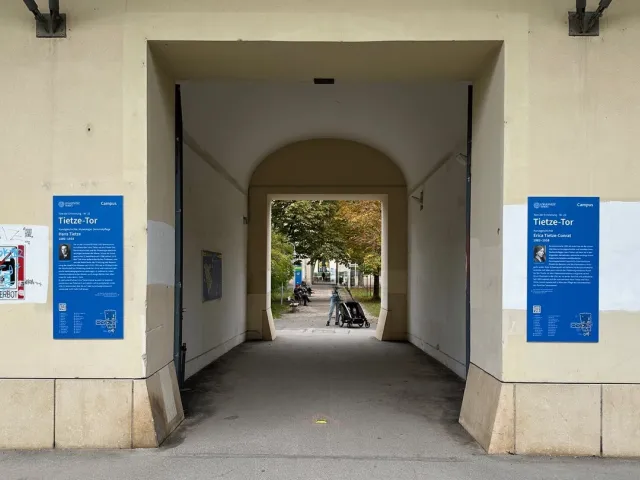
He was honored in 1998 by the naming of one of the "Gates of Remembrance" on the campus of the University of Vienna after him (Hell Gate, passageway between courtyard 2 and courtyard 7).
Nora Pärr, Maximilian Hell Und Seine Bedeutung Für Gelehrtengesellschaften Seiner Zeit. Mensch – Wissenschaft – Magie. Mitteilungen Der Österreichischen Gesellschaft Für Wissenschaftsgeschichte 38/39 (2023) (2023) 109–128.
Franz Lackner, Die Jesuitenprofessoren an Der Philosophischen Fakultät Der Wiener Universität. 1712–1773. DisseraIionen Der Universität Wien . Vol. 128/I (Wien 1976).
Constantin Wurzbach, Biographisches Lexikon Des Kaiserthums Oesterreich, Enthaltend Die Lebensskizzen Der Denkwürdigen Personen, Welche Seit 1750 in Den österreichischen Kronländern Geboren Wurden Oder Darin Gelebt Und Gewirkt Haben, 60 Tl (Wien).