

Study costs in the Middle Ages and the early Modern Age
15.–16th century
“Free education”, “against tuition fees”, “no social selection” and similar demands are often put forward in the – sometimes fiercely, sometimes not so vigorously fought – debate about universities and in particular their financing. In this context, it is often also argued that there had supposedly been no admission restrictions in the past and that it had therefore been possible for “the poor” to study.
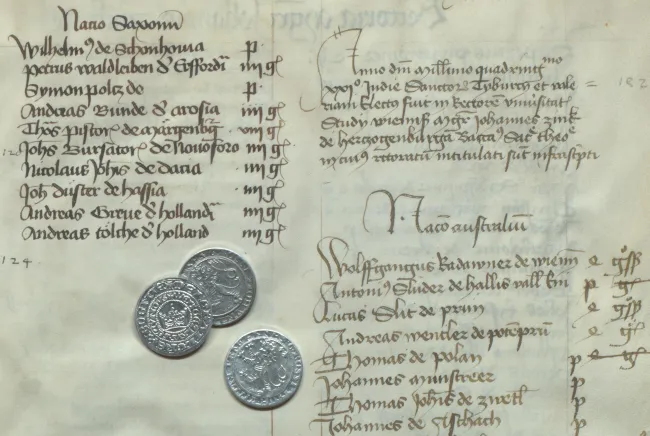
How was the situation at the University of Vienna in actual fact? The medieval university statutes did indeed not include any limitations in regard to the students’ financial situation and even offered partial exemptions from fees for poor people. An overview of the costs that accrued during the studies, however, shows that while these exemptions somewhat mitigated the financial burden, studying at the university still put an enormous strain on the students’ wallets. When compared to contemporary wages, a university education was hardly affordable for people with a low income.
Universität Wien
Revisions allow you to track differences between multiple versions of your content, and revert to older versions.
| Revision | Operations |
|---|---|
| 11.10.2024 - 11:05 by katharina kniefacz | Current revision |