
Jahoda, Marie
Born in
Wien,
Austria
Died in
Keymer,
United Kingdom
| Honor | Title | Faculty | Date | |
|---|---|---|---|---|
| Scholarships/Awards/Foundations | Marie Jahoda-Stipendium | 2019–2024 |
Show more
Das Förderprogramm wurde als Back to Research Grant ursprünglich 2010 von der Fakultät für Geowissenschaften, Geographie und Astronomie entwickelt und erfolgreich umgesetzt. Im Jahr 2013 wurde es auf universitäre Ebene gehoben und im Jahr 2019 nun auf Marie Jahoda-Stipendienprogramm umbenannt. Mit dem Marie Jahoda-Stipendium fördert die Universität Wien hochqualifizierte Wissenschafter*innen (Frauen, trans-/intergeschlechtliche und nicht-binäre Personen), die ihre wissenschaftliche Laufbahn aufgrund von Pflege- und/oder Betreuungsaufgaben im familiären bzw. nahen Umfeld unterbrochen oder reduziert haben. The funding program was originally developed and successfully implemented as a Back to Research Grant by the Faculty of Earth Sciences, Geography and Astronomy in 2010. It was raised to university level in 2013 and renamed the Marie Jahoda Scholarship Program in 2019. With the Marie Jahoda Scholarship, the University of Vienna supports highly qualified scientists (women, trans/intersex and non-binary persons) who have interrupted or reduced their academic careers due to care and/or caring responsibilities in the family or close environment. In 2024, it was replaced by the Franziska Seidl Funding Program for postdocs. |
|
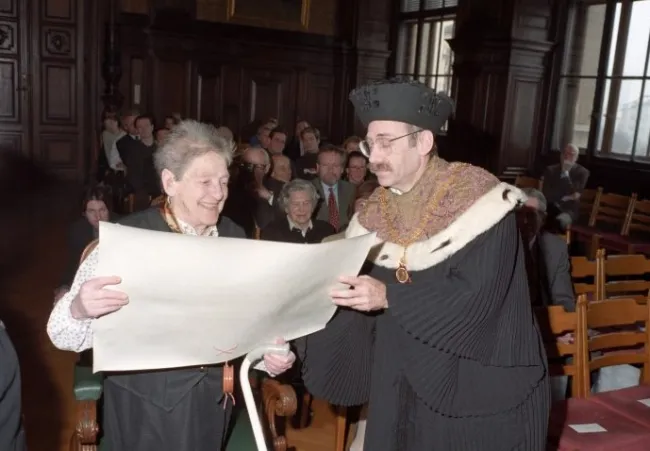
| Honorary Doctorate | Dr. phil. h.c. | Faculty of Integrative Studies | 1998/99 | |
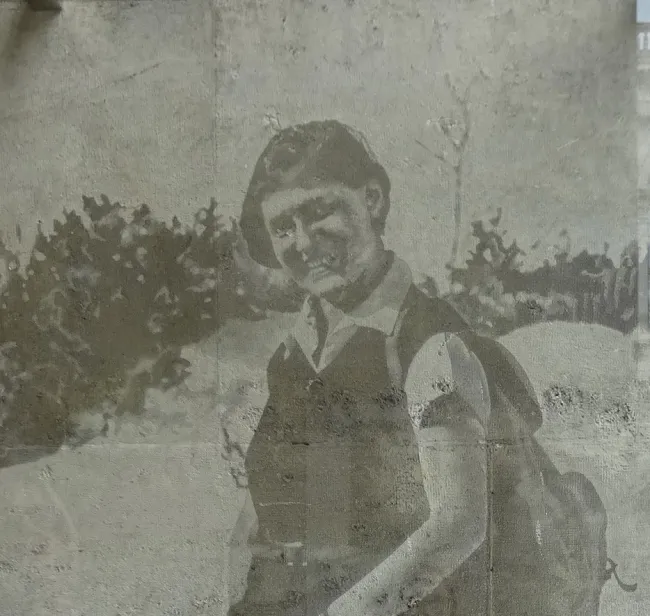
| Monument in arcaded court | Faculty of Social Sciences | 2015/16 |
Show more
Wandbild/Relief von Catrin Bolt, am 30. Juni 2016 enthüllt. siehe auch u:monuments: Denkmal Marie Jahoda |
|
| Gate of Remembrance | Jahoda-Tor | Faculty of Humanities | 1998/99 |
CC BY-NC-ND 4.0

derknopfdruecker.com
Bea Laufersweiler
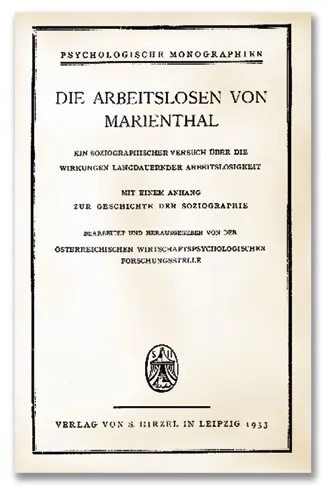
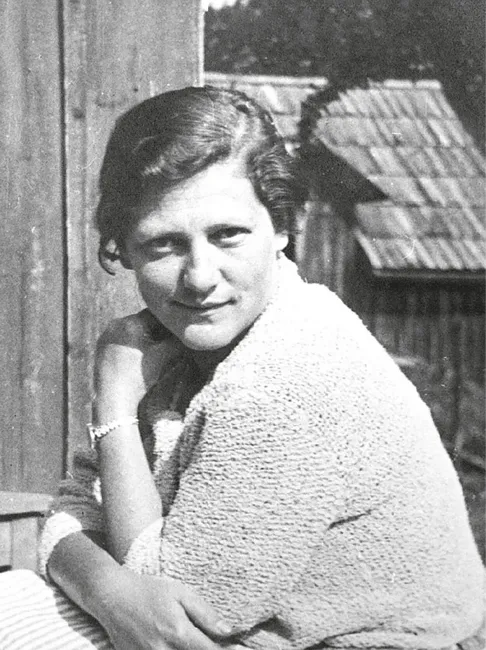
Marie Jahoda grew up in a middle-class Viennese family committed to the ideas of the Enlightenment and humanistic educational ideals. Her political commitment began while she was still at school, when she joined the "Association of Socialist Secondary School Students", of which she was later elected chairwoman. In 1926, she began studying psychology at the University of Vienna and attended courses at the Pedagogical Academy of the City of Vienna. She married the sociologist Paul Lazarsfeld and during her studies concentrated on the lectures and seminars of the research couple Karl Bühler and Charlotte Bühler, whose assistant was Paul Lazarsfeld. With the founding of the "Economic Psychology Research Center" association (President: Karl Bühler), an institutional platform was created for young empirical social research, with Paul Lazarsfeld as scientific director (together with Hans Zeisel) and Marie Jahoda as a member of staff. The most important study of the newly founded association was the first listener survey commissioned by Radio Vienna (RAVAG) (1931). Marie Jahoda received her doctorate in 1932 and in the following year, together with her husband and Hans Zeisel, produced her now best-known study "The Unemployed of Marienthal", which documented the effects of mass unemployment on individuals and their communities. Both the innovative social psychological research method and the controversial topic of unemployment made the research team internationally renowned. After Paul Lazarsfeld did not return from a stay in the USA for political reasons, Marie Jahoda took over the management of the "Economic Psychology Research Center", but also worked as an assistant teacher in several elementary and secondary schools (1933/34).
She was arrested in 1936 because of her political involvement in illegal activities and the research center was closed. After nine months in prison, she was forced to leave Austria and emigrated to England, where she was able to continue working in social research. From 1945 to 1958, she lived in the USA, where she also taught social psychology at New York University. Her research topics during this time included investigations into the origins of anti-Semitism and racism; however, Marie Jahoda's research continued to focus on the scientific study of the work process. She returned to England in 1958 and taught at Brunel University and the University of Sussex until her retirement in 1973.
She was honored in 1998 by the naming of one of the "Gates of Remembrance" on the campus of the University of Vienna (Jahoda Gate, passageway between courtyard 1 and courtyard 2) and by the award of an honorary doctorate. In 2016, a memorial was erected for her in the arcaded courtyard of the University of Vienna (artist: Catrin Bolt).
Authors
Thomas Maisel
Last updated
24.09.2026
Versioned citation link
https://geschichte-v2026.visuelles.xyz/en/node/28588/revisions/34653/view